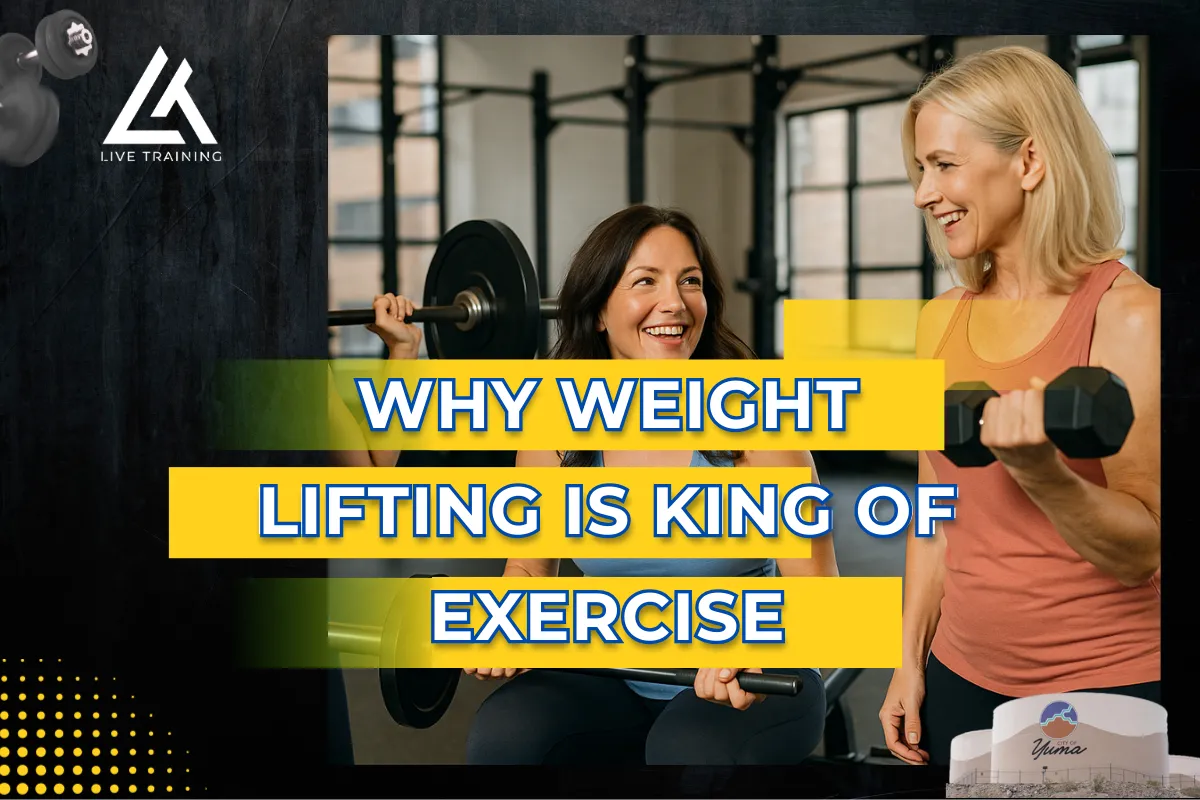
10. Why Weightlifting Is Still The King of Exercise
Why Weightlifting Is Still the King of Exercise
And Why the Fitness Industry Keeps Forgetting It
The fitness industry is obsessed with what’s new.
Cold plunges.
Biohacking.
Wearables.
HIIT fads.
Trendy machines.
“Revolutionary” programs.
Every year, there’s something louder, flashier, and more marketable.
But when you strip away the branding and hype, one truth keeps standing:
Strength training is still the foundation of real health.
Not because it’s trendy.
Because it works.
And it’s been working for decades.
The Golden Truth the Industry Keeps Repackaging
Take marketing out of fitness, and the fundamentals don’t change.
The human body responds to:
Progressive resistance
Mechanical tension
Load over time
That’s it.
Muscles adapt.
Bones strengthen.
Joints stabilize.
Nervous systems become more efficient.
This isn’t controversial. It’s biology.
Weightlifting — or resistance training — isn’t just about aesthetics. It’s about building a body that holds up under real life.
Weightlifting Protects Your Joints — Not Destroys Them
One of the biggest myths we hear in Yuma is:
“Lifting weights will ruin my knees or back.”
The opposite is usually true.
When done properly, resistance training:
Strengthens the muscles that support joints
Improves joint alignment and stability
Enhances load tolerance
Reduces chronic pain
Weak muscles don’t protect joints.
Strong, coordinated muscles do.
Most joint pain isn’t from using your body — it’s from underusing it.
Bone Density: The Silent Benefit Most People Ignore
After age 30, bone density gradually declines.
After 40, it accelerates.
Cardio alone does not significantly stimulate bone growth.
Resistance training does.
Loading the skeleton under controlled stress signals the body to:
Maintain bone density
Increase bone strength
Reduce long-term fracture risk
This is one of the most important reasons adults 30+ in Yuma should prioritize strength training.
It’s not about bigger muscles.
It’s about stronger infrastructure.
Independence Has a Strength Requirement
At some point, fitness stops being about six-packs.
It becomes about independence.
Can you:
Stand up from the floor?
Carry groceries without strain?
Climb stairs confidently?
Catch yourself if you trip?
Those aren’t cardio questions.
They’re strength questions.
Muscle mass is one of the strongest predictors of long-term independence and functional ability.
When strength declines, so does autonomy.
When strength improves, confidence follows.
Cardio Has a Place — But It Has a Ceiling
Cardiovascular training is important.
It supports:
Heart health
Circulation
Endurance
But here’s the reality:
Without strength, everything else has a ceiling.
You can improve your heart health — but if your joints are unstable, you’ll stop exercising.
You can build endurance — but if your muscles fatigue too quickly, you’ll compensate.
You can burn calories — but if muscle mass declines, metabolism slows.
Cardio supports health.
Strength sustains it.
Why Resistance Training Should Be the Foundation
A smart program doesn’t eliminate cardio.
It builds on strength first.
When resistance training becomes the base:
Joints tolerate more activity
Muscles support longer movement
Energy production improves
Recovery becomes more efficient
Strength is the foundation that makes everything else safer and more effective.
At Live Fit Yuma, we don’t chase trends.
We build durable bodies.
And that starts with progressive, structured resistance training tailored to how someone moves — not just what’s popular this year.
Health Now — and Health 20 Years From Now
The real power of weightlifting isn’t what it does this month.
It’s what it protects long term.
Strength training supports:
Hormonal health
Metabolic function
Injury resilience
Balance and fall prevention
Mental confidence
It’s one of the few interventions that improves both short-term performance and long-term longevity.
And it doesn’t require gimmicks.
Just consistency and smart progression.
The Bottom Line
Fitness trends will keep changing.
The marketing will get louder.
But the foundation remains the same.
Strength training is still the king — not because it’s flashy, but because it’s fundamental.
You can’t avoid aging.
But you can build a body that handles it well.
And that starts with resistance.
